Metabolics Ionic Manganese
Manganese is an essential mineral but in high doses may become toxic. It is found in fruits such as pineapple, nuts and whole-wheat grains. It is also found in drinking water.
Benefits of Manganese
- Manganese contributes to energy yielding metabolism. Manganese is needed for activating enzymes that metabolise carbohydrates, cholesterol and amino acids. Pyruvate carboxylase a manganese dependent enzyme, is needed for gluconeogenesis (production of energy in absence of carbohydrates).
- Manganese contributes to the maintenance of normal bones. Manganese is a cofactor in the enzymes glycosyltransferases which are needed to form healthy bone and cartilage.
- Manganese contributes to the normal formation of connective tissue. Manganese deficiencies can result in abnormal cartilage formation.
- Manganese contributes to the protection of cells from oxidative stress. Manganese forms a part of many enzymes. One of these is manganese superoxide dismutase (MnSOD), the main antioxidant enzyme in the mitochondria produced when mitochondria make molecules of ATP (energy); it allows the conversion of superoxide free radicals to water.
Best Before End: 09/2025
Product Information
Product Information
Shipping & Returns
Shipping & Returns
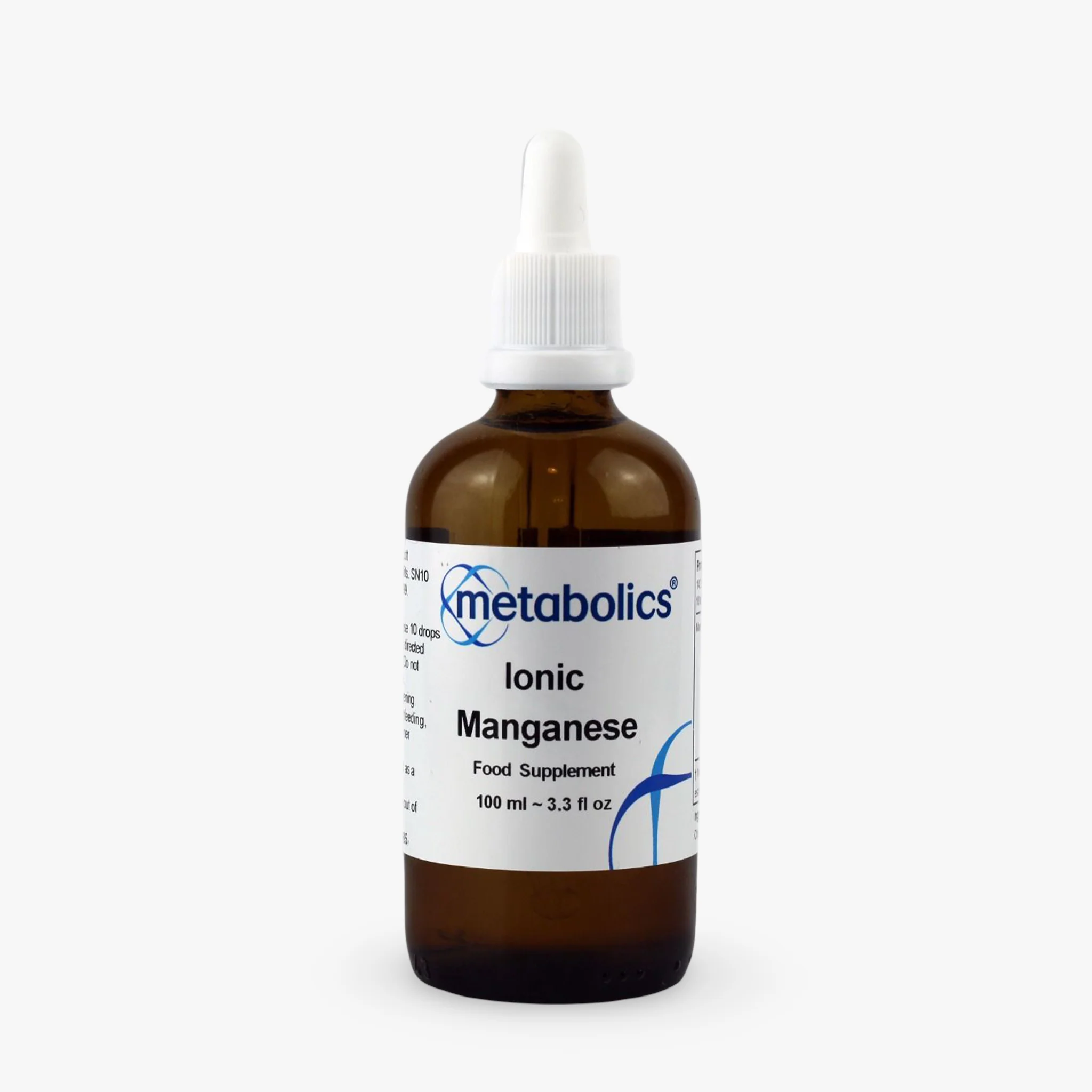
Metabolics Ionic Manganese
Metabolics Ionic Manganese
Manganese is an essential mineral but in high doses may become toxic. It is found in fruits such as pineapple, nuts and whole-wheat grains. It is also found in drinking water.
Benefits of Manganese
- Manganese contributes to energy yielding metabolism. Manganese is needed for activating enzymes that metabolise carbohydrates, cholesterol and amino acids. Pyruvate carboxylase a manganese dependent enzyme, is needed for gluconeogenesis (production of energy in absence of carbohydrates).
- Manganese contributes to the maintenance of normal bones. Manganese is a cofactor in the enzymes glycosyltransferases which are needed to form healthy bone and cartilage.
- Manganese contributes to the normal formation of connective tissue. Manganese deficiencies can result in abnormal cartilage formation.
- Manganese contributes to the protection of cells from oxidative stress. Manganese forms a part of many enzymes. One of these is manganese superoxide dismutase (MnSOD), the main antioxidant enzyme in the mitochondria produced when mitochondria make molecules of ATP (energy); it allows the conversion of superoxide free radicals to water.
Best Before End: 09/2025
Original: $31.88
-70%$31.88
$9.56Product Information
Product Information
Shipping & Returns
Shipping & Returns
Description
Manganese is an essential mineral but in high doses may become toxic. It is found in fruits such as pineapple, nuts and whole-wheat grains. It is also found in drinking water.
Benefits of Manganese
- Manganese contributes to energy yielding metabolism. Manganese is needed for activating enzymes that metabolise carbohydrates, cholesterol and amino acids. Pyruvate carboxylase a manganese dependent enzyme, is needed for gluconeogenesis (production of energy in absence of carbohydrates).
- Manganese contributes to the maintenance of normal bones. Manganese is a cofactor in the enzymes glycosyltransferases which are needed to form healthy bone and cartilage.
- Manganese contributes to the normal formation of connective tissue. Manganese deficiencies can result in abnormal cartilage formation.
- Manganese contributes to the protection of cells from oxidative stress. Manganese forms a part of many enzymes. One of these is manganese superoxide dismutase (MnSOD), the main antioxidant enzyme in the mitochondria produced when mitochondria make molecules of ATP (energy); it allows the conversion of superoxide free radicals to water.
Best Before End: 09/2025